

Nonprofits and faith-based organizations often create meaningful content that serves their communities, yet struggle to appear in search results when people need them most. Without a systematic SEO approach, valuable resources remain hidden from those actively searching for help, support, or spiritual guidance. This guide walks you through a practical SEO strategy process designed specifically for mission-driven organizations in 2026. You'll learn how to increase your digital visibility, reach more people aligned with your cause, and amplify your impact through organic search without requiring massive budgets or technical expertise.
Table of Contents
- Understanding the importance of SEO for nonprofits
- Preparing your nonprofit for an effective SEO strategy
- Executing the SEO strategy process step-by-step
- Verifying and maintaining your SEO strategy for long-term impact
- Enhance your nonprofit's SEO with expert digital marketing services
Key takeaways
| Point | Details |
|---|---|
| SEO drives mission delivery | Organic search acts as digital infrastructure connecting your cause with people actively seeking help or community |
| Authentic content wins | Google's 2026 algorithms reward genuine, helpful, people-first content that demonstrates real expertise and serves user needs |
| Process beats perfection | A clear step-by-step SEO framework helps resource-constrained nonprofits focus efforts and achieve measurable results |
| Measurement sustains growth | Regular tracking and quarterly reviews keep your strategy aligned with mission goals and responsive to algorithm changes |
Understanding the importance of SEO for nonprofits
Nonprofits face intense competition in search results, often overshadowed by commercial sites with larger marketing budgets. Yet organic search captures intent that other channels miss, reaching individuals at the exact moment they search for causes, resources, or spiritual guidance aligned with your mission. This timing creates powerful opportunities for meaningful connections.
The return on investment tells a compelling story. Research shows 49% of nonprofit marketers rank organic search as their highest-ROI marketing channel. This makes SEO not just cost-effective but essential for organizations maximizing limited resources. Faith-based groups benefit particularly as millions of adults now search online first when seeking congregations or spiritual community.
Your digital presence functions as the primary entry point for first-time visitors. Consider these realities:
- People research nonprofits online before donating or volunteering
- Search visibility builds credibility and trust with potential supporters
- Organic traffic continues generating value long after content publication
- Mission-aligned keywords connect you with highly motivated audiences
"Your website acts as a digital front door. Nearly every first-time visitor will interact with it before stepping into your building."
Unlike paid advertising that stops when budgets run out, SEO compounds over time. Each optimized page, helpful article, or community resource you create continues attracting visitors months and years later. For nonprofit digital marketing strategies, this sustainability proves invaluable.
SEO isn't merely marketing tactics. It's foundational infrastructure enabling mission delivery at scale. When someone searches for food assistance, addiction recovery resources, or faith communities in their area, your organization should appear. Missing from search results means missing opportunities to serve those who need you most.
Preparing your nonprofit for an effective SEO strategy
Before diving into optimization work, assess your starting point honestly. Run your website through free SEO audit tools to identify technical issues, broken links, or mobile usability problems. Understanding current performance establishes baselines for measuring progress and reveals quick wins that build momentum.
Align SEO goals directly with mission priorities. If increasing volunteer sign-ups matters most, optimize for volunteer-related searches. If expanding donor base drives strategy, focus on content attracting potential supporters. This alignment ensures SEO efforts serve organizational objectives rather than chasing vanity metrics like raw traffic numbers.
Budget and team constraints actually force strategic clarity. Limited resources prevent spreading efforts too thin, encouraging focus on highest-impact activities. Small teams can often move faster than large organizations, testing and adapting strategies quickly based on results.
Your website serves as digital infrastructure requiring basic functionality before advanced optimization makes sense. Ensure these foundations exist:
- Fast page loading speeds on mobile devices
- Clear navigation helping visitors find information easily
- Secure HTTPS connection building trust and meeting Google requirements
- Contact information and calls-to-action prominently displayed
Set up essential tracking tools now. Google Analytics reveals how visitors find and use your site. Google Search Console shows which searches trigger your pages and identifies technical issues Google encounters. Both tools are free and provide data guiding strategic decisions.
Pro Tip: Schedule a 30-minute website walkthrough with someone unfamiliar with your organization. Watch them try completing key tasks like finding service information or making a donation. Their struggles reveal user experience gaps that also hurt SEO performance.
Document your current content inventory. List existing pages, blog posts, and resources. Note which topics you've covered and which gaps exist. This audit prevents duplicating effort and reveals content opportunities aligned with audience needs. Optimizing your faith or nonprofit website starts with knowing what you already have.
Consider how content strategy aligns with mission goals. Your messaging should reflect organizational values while addressing practical questions your community asks. This balance between mission authenticity and search optimization creates content that ranks well and resonates deeply.
Executing the SEO strategy process step-by-step
Keyword research forms your strategic foundation. Start by listing phrases your community actually uses when searching for services you provide. Think like someone in need rather than using internal organizational jargon. A family seeking food assistance searches "food bank near me" or "emergency food help," not "nutritional resource distribution programs."

Use free tools like Google's Keyword Planner or Ubersuggest to discover search volumes and related phrases. Prioritize keywords with clear intent matching your services. Long-tail phrases like "Christian addiction recovery program Seattle" often convert better than broad terms despite lower search volumes because they indicate specific, ready-to-act intent.
Content gap analysis identifies priority topics where you can establish thought leadership. Compare your content against what ranks for target keywords. What questions do top-ranking pages answer? What perspectives or local context can you uniquely provide? These gaps represent opportunities to create genuinely helpful resources.
Optimize existing pages systematically. Update outdated information, improve readability with shorter paragraphs and subheadings, and ensure each page targets a specific keyword naturally. Add internal links connecting related content, helping visitors and search engines understand your site structure. Technical fixes like optimizing images and improving mobile responsiveness boost rankings.
Creating new helpful content requires balancing SEO strategy with authentic storytelling. Follow this sequence:
- Choose a keyword from your research matching audience needs
- Outline the most comprehensive answer to that search query
- Write primarily for human readers, naturally incorporating keywords
- Include original insights, stories, or data only you can provide
- Add clear calls-to-action guiding next steps
Frequently asked questions make excellent content. They directly address search queries, demonstrate expertise, and often appear in featured snippets atop search results. Document questions staff repeatedly answer, then create thorough written responses. This scales your knowledge while meeting Google's helpful content standards prioritizing direct, practical value.
| Approach | Benefits | Challenges | | --- | --- | | Optimizing existing content | Quick wins, leverages current authority, improves user experience for returning visitors | Limited by existing topic coverage, may not address new opportunities | | Creating new content | Targets fresh keywords, demonstrates ongoing expertise, builds long-term organic growth | Requires more time investment, takes months to rank, needs consistent effort |
Build backlinks through genuine community relationships. Partner organizations, local media covering your work, and supporters sharing your resources create natural links that signal credibility to search engines. Focus on earning links rather than buying them, as authentic backlinks from relevant sites carry far more value.
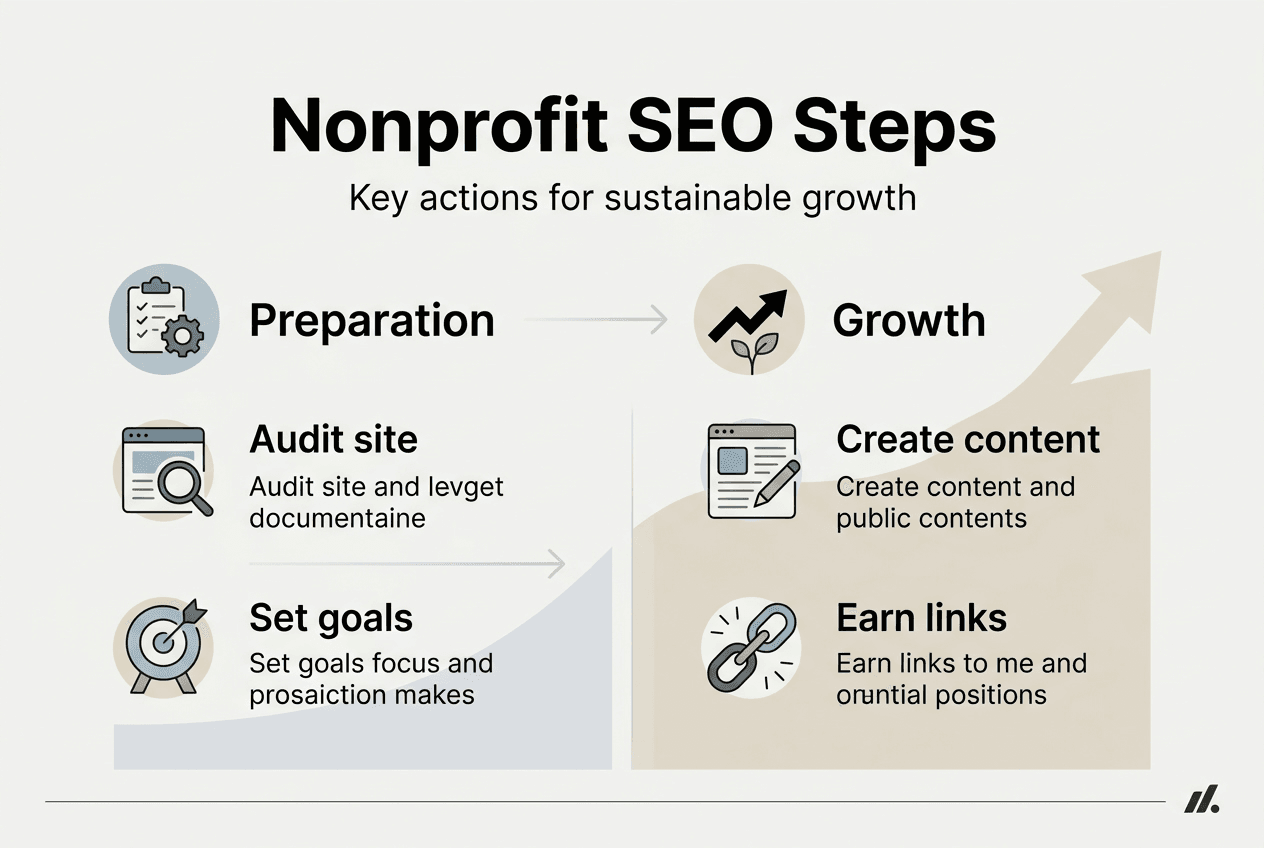
Pro Tip: Create downloadable resources like volunteer guides, donor impact reports, or community resource lists. These naturally attract links as other organizations reference and share them, building your domain authority over time.
Leverage nonprofit content creation strategies that showcase impact through stories, data, and testimonials. Authentic narratives about lives changed resonate with readers while differentiating your content from generic information. This people-first approach aligns with both mission values and modern SEO best practices.
Explore Google for Nonprofits resources offering free tools and ad grants. These programs provide capabilities typically requiring significant budgets, leveling the playing field against larger organizations. Website automation can also streamline repetitive tasks, freeing staff time for strategic content creation.
Verifying and maintaining your SEO strategy for long-term impact
Tracking performance transforms SEO from guesswork into data-driven strategy. Google Analytics reveals which pages attract visitors, how long they stay, and what actions they complete. Google Search Console shows your rankings for specific keywords, click-through rates, and technical issues requiring attention. Together, these free tools provide comprehensive visibility into organic search performance.
Define key performance indicators aligned with mission goals rather than vanity metrics. Relevant KPIs might include:
- Organic traffic to service information pages
- Volunteer application form completions from search visitors
- Donation conversions attributed to organic channels
- Engagement metrics like time on page and pages per session
With Google holding 91% of search share, focus optimization efforts there first. While other search engines matter, Google's dominance means winning there drives the majority of organic results. Google's ranking system rewards clear, relevant content on user-friendly websites, making quality improvements serve both search engines and human visitors.
Schedule quarterly SEO health checks examining technical performance, content freshness, and competitive positioning. Technology and algorithms evolve constantly. Regular audits catch issues before they significantly impact rankings. Review top-performing content to understand what resonates, then create more resources addressing related topics.
Stay informed about algorithm updates without obsessing over every fluctuation. Subscribe to reputable SEO news sources covering major changes. When Google announces updates, review your content against new guidelines and adjust as needed. Most updates reward quality improvements you should make anyway, like enhancing user experience or demonstrating expertise.
Pro Tip: Set calendar reminders to refresh your highest-traffic content annually. Update statistics, add recent examples, and ensure information remains current. This signals ongoing relevance to search engines while maintaining value for readers discovering older posts.
Content decay happens naturally as information ages. Pages ranking well today may slip as competitors publish fresher resources or as search intent evolves. Combat this by identifying declining pages in Search Console and updating them with current information, expanded coverage, or improved formatting. Often, refreshing existing content proves more efficient than creating new pages.
Build SEO maintenance into organizational workflows rather than treating it as occasional projects. Assign responsibility for monitoring analytics, updating content, and implementing technical improvements. Even small, consistent efforts compound into significant results over time. Consider conducting an SEO audit to establish a baseline and prioritize improvements systematically.
Enhance your nonprofit's SEO with expert digital marketing services
Implementing a comprehensive SEO strategy while managing daily operations stretches many nonprofit teams thin. MCNM Marketing specializes in helping faith-based organizations and nonprofits maximize digital impact without overwhelming limited resources. Our search engine optimization services align technical expertise with mission-driven goals, ensuring your optimization efforts serve both search algorithms and community needs.
Start with a detailed SEO audit and strategy report identifying your highest-impact opportunities. We analyze technical performance, content gaps, and competitive positioning to create actionable roadmaps tailored to your resources. Our digital outreach services extend beyond SEO, integrating email marketing, social media, and automation to amplify your message across channels. Partner with experts who understand both digital marketing and nonprofit missions, allowing you to focus on serving your community while we handle the technical complexities of sustained organic growth.
FAQ
What is the most important first step in a nonprofit SEO strategy?
Keyword research focused on mission-relevant phrases establishes your strategic foundation. Identify the specific terms your community uses when searching for services you provide, then prioritize keywords with clear intent matching your offerings. Content gap analysis follows closely, revealing topics where you can provide unique value and establish thought leadership. These research steps ensure you create content your audience actively searches for rather than guessing at topics.
How can nonprofits create authentic content that ranks well?
Focus on original stories, volunteer experiences, community impact data, and educational resources addressing real questions. Google's helpful content standards reward content demonstrating genuine expertise and serving user needs first. Avoid generic information available elsewhere and never duplicate content from other sources. Share perspectives only your organization can provide, like local context, specific program outcomes, or unique approaches to community challenges. This authenticity differentiates your content while building trust with both readers and search algorithms. Explore our nonprofit content creation guide for detailed strategies.
How do I measure if my nonprofit SEO strategy is working?
Use Google Analytics to monitor organic traffic trends, engagement metrics, and conversion actions like donations or volunteer sign-ups. Google Search Console reveals keyword rankings, click-through rates, and technical issues affecting visibility. Track metrics aligned with mission goals rather than vanity numbers. If expanding volunteer programs matters most, measure application completions from organic visitors. For fundraising priorities, track donation conversions attributed to search traffic. Regular SEO audits assess overall health and identify improvement opportunities. Compare performance quarterly to spot trends and adjust strategy based on what's working.
How long does it take to see results from nonprofit SEO efforts?
Expect three to six months before seeing significant organic traffic increases from new content and optimization work. Search engines need time to discover, index, and evaluate changes before adjusting rankings. Quick wins like fixing technical errors or optimizing high-potential existing pages may show results faster. Long-term success requires consistent effort rather than one-time projects. Content created today continues generating value for years, making SEO a compounding investment. Patience and persistence matter more than perfection, especially for resource-constrained organizations building authority gradually through quality content and genuine community engagement.
Recommended
- Digital Growth Strategy: Shaping Nonprofit Impact | AI and Digital Marketing Service by MCNM
- 5 nonprofit digital marketing strategies boosting donations 42% | AI and Digital Marketing Service by MCNM
- Optimize your faith nonprofit website with AI in 2026 | AI and Digital Marketing Service by MCNM
- Why Digital Strategies Matter for Nonprofits
- SEO News