

Trying to grow meaningful connections and inspire giving can sometimes feel overwhelming with limited time and resources. Faith-based nonprofits now face the challenge of moving beyond basic websites or occasional social posts to meaningful, mission-driven digital strategies. By adopting comprehensive approaches that blend purpose-driven digital solutions with AI-powered tools, your organization can maximize every online interaction, making your outreach more personal, efficient, and impactful.
Table of Contents
- Defining Digital Strategies for Nonprofits
- Types of Digital Strategies for Organizations
- Key Benefits of Purpose-Driven Digital Solutions
- AI and Automation in Digital Outreach
- Risks and Mistakes in Digital Strategy Planning
Key Takeaways
| Point | Details |
|---|---|
| Holistic Digital Strategy | Nonprofits should view digital strategies as integrated frameworks that align with organizational missions, involving all digital channels for maximum outreach. |
| Purpose-Driven Solutions | Emphasizing technology that supports mission advancement is crucial for nonprofits to create meaningful social change while ensuring operational efficiency. |
| AI and Automation Benefits | Leveraging AI and automation enhances engagement and operational efficiency, allowing nonprofits to create tailored communications and streamline tasks. |
| Avoid Common Pitfalls | Organizations must avoid risks like misaligned technology investments and inadequate training to ensure successful digital strategy implementation. |
Defining Digital Strategies for Nonprofits
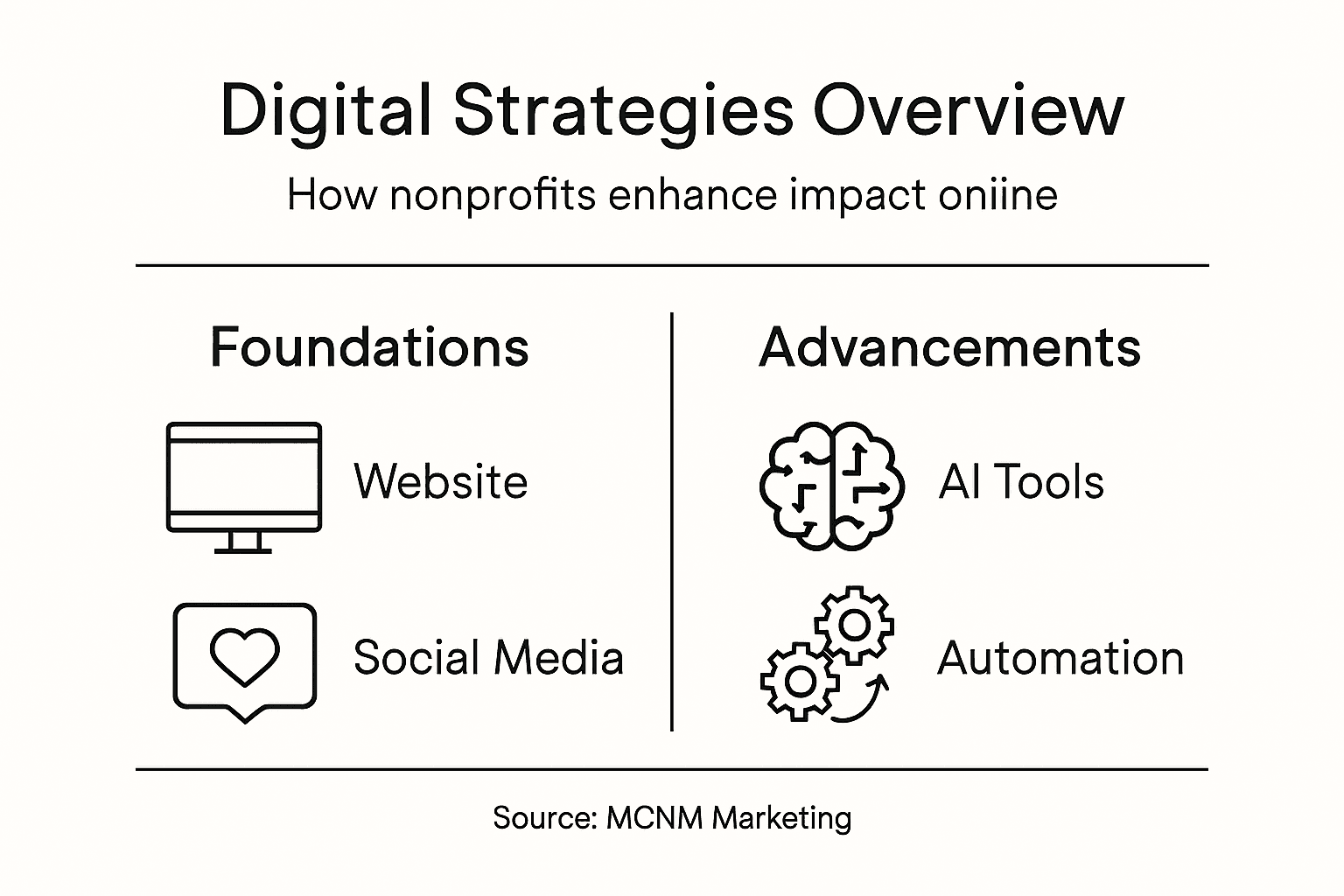
Digital strategies represent comprehensive action plans that leverage online technologies, platforms, and tools to achieve organizational objectives and expand mission impact. For nonprofits, these strategies go far beyond simple website presence or occasional social media posts—they involve strategic approaches to engaging supporters, driving donations, and creating meaningful digital connections.
A robust digital strategy typically encompasses several core components:
- Website optimization for user experience and conversion
- Content marketing aligned with organizational mission
- Digital fundraising techniques
- Analytics-driven decision making
- Supporter engagement platforms
Nonprofits increasingly recognize that digital strategy development requires sophisticated understanding of technology, audience behavior, and mission-driven communication. Effective strategies integrate multiple digital channels—social media, email campaigns, mobile platforms, and interactive web experiences—into a cohesive approach that amplifies organizational reach.
Successful digital strategies demand more than technical implementation. They require deep understanding of an organization's unique goals, target audience, and capacity for digital transformation. Nonprofits must approach digital strategy as a holistic approach to mission advancement, not merely a technical checklist.
Pro tip: Conduct a comprehensive digital audit to understand your current online capabilities and identify strategic opportunities for improvement.
Types of Digital Strategies for Organizations
Digital strategies for nonprofits and organizations are not one-size-fits-all approaches but rather nuanced frameworks designed to address specific organizational objectives. These strategies can be categorized into several distinct types that help leverage digital technologies for maximum impact and mission advancement.
Key digital strategy types include:
- Engagement Strategy: Focuses on building meaningful connections with supporters through interactive digital platforms
- Fundraising Strategy: Utilizes online channels to generate donations and financial support
- Awareness Strategy: Leverages digital marketing to amplify organizational message and mission
- Community Building Strategy: Creates digital spaces for supporter interaction and collaboration
- Advocacy Strategy: Uses digital tools to drive social and political change
Nonprofits can enhance their digital approach by exploring content marketing techniques that align technological capabilities with organizational goals. Effective strategies integrate multiple digital channels, ensuring a comprehensive approach that reaches diverse audience segments and maximizes potential impact.
Implementing these digital strategies requires careful analysis of organizational capacity, technological resources, and specific mission-driven objectives. Successful nonprofits view digital strategies as dynamic, adaptable frameworks that evolve with changing technological landscapes and supporter expectations.

Pro tip: Develop a flexible digital strategy roadmap that allows for continuous adaptation and technological innovation.
Here's a comparison of common digital strategy types and their primary outcomes for nonprofits:
| Strategy Type | Primary Goal | Typical Tools |
|---|---|---|
| Engagement | Build lasting connections | Social media, forums |
| Fundraising | Increase online donations | Crowdfunding, email |
| Awareness | Expand visibility | SEM, blogs |
| Community Building | Foster supporter interaction | Chat platforms, groups |
| Advocacy | Drive social change | Petitions, campaigns |
Key Benefits of Purpose-Driven Digital Solutions
Purpose-driven digital solutions represent transformative approaches that enable nonprofits to maximize their social impact through strategic technological integration. These solutions go beyond traditional technological implementations, focusing on aligning digital tools with organizational missions and creating meaningful, sustainable change.
Key benefits of purpose-driven digital solutions include:
- Operational Efficiency: Streamlining internal processes and reducing administrative overhead
- Enhanced Supporter Engagement: Creating more personalized and interactive communication channels
- Data-Driven Decision Making: Leveraging analytics to understand supporter behaviors and optimize strategies
- Resource Optimization: Maximizing limited budgets through intelligent technological investments
- Scalable Impact: Expanding organizational reach without proportionally increasing operational costs
Smart technologies in nonprofits fundamentally transform organizational capabilities by automating routine tasks and enabling staff to focus more deeply on mission-critical objectives. These digital solutions empower nonprofits to create more targeted, efficient, and impactful strategies that respond dynamically to community needs.
Successful implementation of purpose-driven digital solutions requires a holistic approach that integrates technological capabilities with organizational culture, ensuring that digital transformation supports rather than replaces human creativity and passion. Nonprofits must view these solutions as strategic enablers that amplify their ability to create meaningful social change.
Pro tip: Conduct regular digital capability assessments to ensure your technological solutions remain aligned with evolving organizational goals and supporter expectations.
AI and Automation in Digital Outreach
AI and automation have revolutionized digital outreach for nonprofits, transforming how organizations engage with supporters, streamline operations, and amplify their social impact. These advanced technologies enable nonprofits to move beyond traditional communication methods, creating more personalized, efficient, and data-driven engagement strategies.
Key applications of AI and automation in nonprofit digital outreach include:
- Personalized Communication: Tailoring donor interactions using predictive analytics
- Chatbot Support: Providing instant, 24/7 information and assistance
- Donor Segmentation: Identifying and targeting potential supporters more effectively
- Campaign Optimization: Using machine learning to improve marketing strategies
- Administrative Automation: Reducing manual tasks and increasing operational efficiency
Smart technologies in nonprofits are fundamentally changing how organizations approach digital communication. AI tools now support complex tasks like drafting communications, personalizing donor engagement, and providing sophisticated research assistance that was previously time-consuming and resource-intensive.
Successful implementation of AI and automation requires a strategic approach that balances technological capabilities with human empathy and organizational mission. Nonprofits must view these tools as enhancers of human creativity, not replacements for personal connection and meaningful storytelling.
Pro tip: Start with small, targeted AI automation projects to build organizational comfort and demonstrate tangible value before implementing broader digital transformation strategies.
The following table summarizes how AI and automation enhance nonprofit outreach compared to traditional methods:
| Approach | Efficiency | Personalization | Scalability |
|---|---|---|---|
| Traditional | Manual and slow | Generic messaging | Limited reach |
| AI/Automation | Fast and streamlined | Tailored interactions | Broad, data-driven |
Risks and Mistakes in Digital Strategy Planning
Digital strategy planning represents a critical process for nonprofits, yet many organizations inadvertently create roadblocks that undermine their technological investments. Understanding these potential pitfalls is essential for developing robust, mission-aligned digital approaches that genuinely enhance organizational effectiveness.
Common risks and mistakes in digital strategy planning include:
- Misaligned Technology Investments: Purchasing tools without clear organizational needs
- Inadequate Staff Training: Implementing technologies without comprehensive team preparation
- Overlooking Data Privacy: Failing to protect supporter information and comply with regulations
- Ignoring Scalability: Selecting solutions that cannot grow with organizational requirements
- Neglecting User Experience: Creating digital platforms that are complex or difficult to navigate
Digital assessment tools help nonprofits systematically identify technology gaps and develop prioritized transformation strategies. By conducting thorough evaluations, organizations can avoid costly mistakes and ensure their digital investments directly support mission objectives.
Successful digital strategy planning demands a holistic approach that balances technological capabilities with human expertise. Nonprofits must view digital transformation as an ongoing process of strategic adaptation, not a one-time technological implementation.
Pro tip: Develop a cross-functional digital strategy team that includes representatives from different departments to ensure comprehensive perspective and organizational alignment.
Unlock the Full Potential of Your Nonprofit's Digital Strategy
Struggling to align your nonprofit’s mission with effective digital tools can feel overwhelming. This article highlights key challenges such as crafting purpose-driven digital solutions, embracing AI and automation, and avoiding common planning mistakes. If your goal is to boost supporter engagement, streamline fundraising, and achieve scalable impact, a tailored, faith-driven digital strategy is essential. Discover how integrating website optimization, marketing automation, and AI-powered outreach can transform your online presence and deepen mission impact.
MCNM Marketing specializes in helping nonprofits, ministries, and small businesses overcome these exact challenges. Our expertise with WordPress platforms and AI automation ensures your digital strategy is not just technical but mission-centered and scalable. Explore services that enhance donor engagement, improve SEO, and optimize digital campaigns to create lasting connections with your audience.
Digital strategy development starts with a strong foundation.
Take the next step today by partnering with MCNM Marketing. Visit MCNM Marketing to learn how our specialized digital marketing solutions can align your technology with your purpose. Transform your nonprofit’s outreach, maximize donations, and build a vibrant online community that reflects your mission and values.
Frequently Asked Questions
What are digital strategies for nonprofits?
Digital strategies for nonprofits are comprehensive action plans that leverage online technologies and platforms to achieve organizational objectives, enhance supporter engagement, and drive donations.
Why is a digital strategy important for nonprofit organizations?
A digital strategy is important for nonprofits as it allows them to effectively connect with their audience, optimize fundraising efforts, and create a meaningful online presence that aligns with their mission.
How can nonprofits benefit from purpose-driven digital solutions?
Purpose-driven digital solutions help nonprofits streamline operations, enhance supporter engagement, make data-driven decisions, optimize resources, and scale their impact without significantly increasing costs.
What role does AI play in nonprofit digital outreach?
AI enhances nonprofit digital outreach by enabling personalized communication, automating administrative tasks, optimizing campaigns, and improving donor segmentation, making engagement more efficient and effective.
Recommended
- Why Use AI in Nonprofits: Boosting Impact and Efficiency | AI and Digital Marketing Service by MCNM
- Content Creation Guide for Maximizing Nonprofit Impact | AI and Digital Marketing Service by MCNM
- AI for Grants and Revenue: How MCNM Helps Nonprofits & Small Businesses Grow | AI and Digital Marketing Service by MCNM
- Services | AI and Digital Marketing Service by MCNM