
Small nonprofits and faith-based organizations without websites face a stark reality: they lose visibility, donor trust, and access to critical funding opportunities. In 2026, when potential supporters and grantmakers start their search online, lacking a web presence means missing essential connections. This guide explains why websites are non-negotiable for nonprofit success and provides practical steps to build effective online platforms. Designed specifically for small nonprofits and faith groups, you'll discover how to enhance engagement, increase donations, and expand your mission's reach through strategic website development.
Table of Contents
- Why visibility and trust matter for small nonprofits
- Key website features that boost engagement and fundraising
- Understanding website traffic and optimizing online reach
- Website accessibility and digital strategy for faith-based organizations
- Empower your nonprofit with expert website solutions
Key takeaways
| Point | Details |
|---|---|
| Visibility drives funding | Nonprofits without websites lose grant eligibility and donor discovery opportunities in 2026. |
| Design builds trust instantly | 94% of first impressions depend on website design, directly impacting donor confidence. |
| Mobile optimization is mandatory | Over half of nonprofit website visitors use mobile devices, requiring responsive design. |
| Accessibility ensures inclusion | WCAG 2.2 compliance improves user experience and protects against legal risks. |
| Strategic traffic sources matter | Organic search generates 44% of nonprofit visits, making SEO essential for growth. |
Why visibility and trust matter for small nonprofits
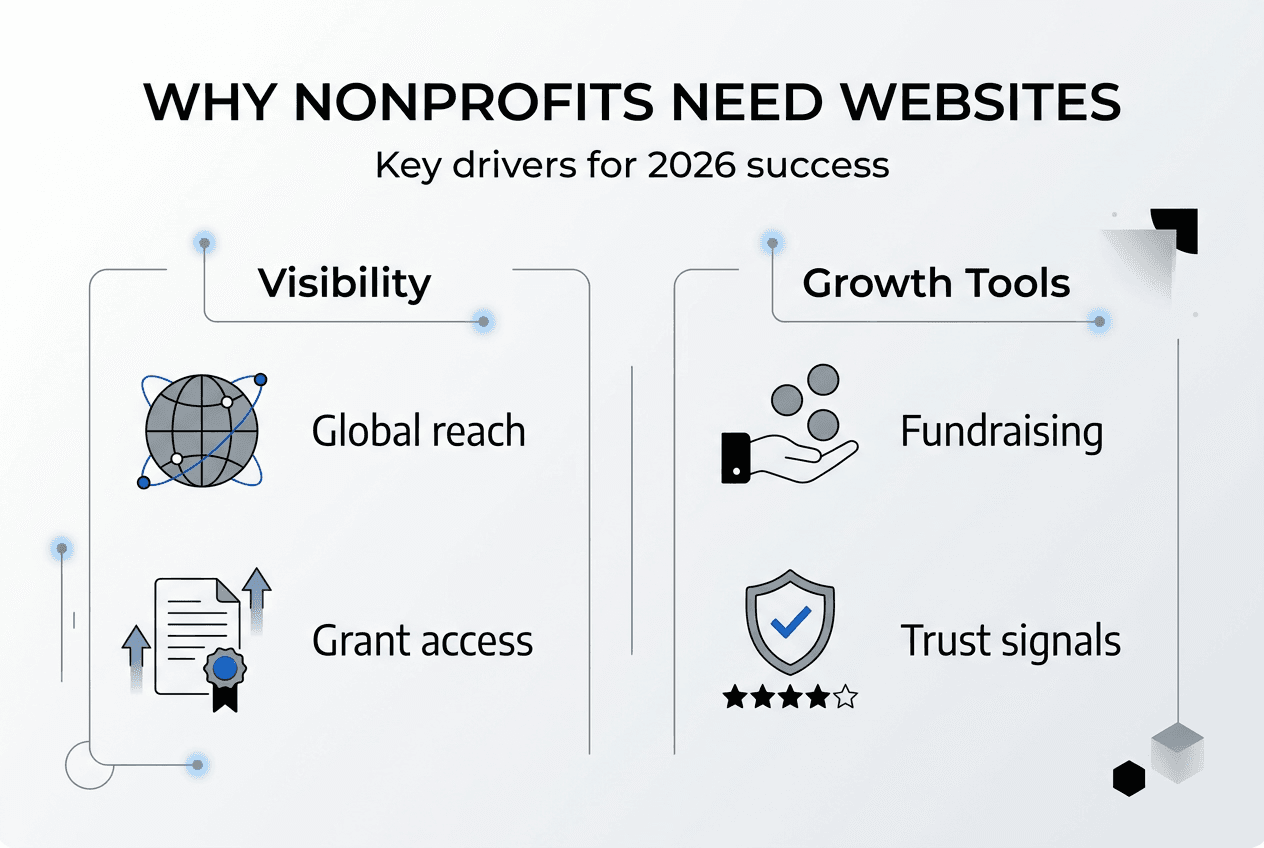
Your nonprofit's mission deserves attention beyond your immediate community. A website transforms local impact into global reach, connecting you with supporters, volunteers, and partners who share your values. When potential donors search for causes they care about, nonprofits without websites lose visibility and miss crucial funding opportunities.
Credibility starts the moment someone discovers your organization online. A professional website instantly signals legitimacy to donors, grantmakers, and community partners. Without this digital foundation, you're asking supporters to trust your mission based solely on word of mouth, a significant disadvantage in 2026's competitive nonprofit landscape.
Many grant applications and corporate partnership programs require applicants to provide a website URL. This simple requirement eliminates organizations without web presence from consideration, regardless of their mission's merit. You're essentially closing doors to funding streams before conversations even begin.
First impressions happen fast online. Research shows that 94% of first impressions are design-related, meaning your website's appearance directly influences whether visitors become donors. A cluttered, outdated, or confusing site damages credibility, while a clean, purposeful design builds confidence in your organization's professionalism and impact.
Consider these visibility and trust factors:
- Search engines prioritize websites with regular content updates and clear mission statements
- Donors research organizations online before making financial commitments
- Media outlets and journalists seek online information when covering nonprofit stories
- Younger generations expect digital presence as a baseline for organizational legitimacy
"Your website is your organization's front door. When it's missing or broken, people simply move on to the next cause."
Effective digital outreach for nonprofits begins with a strong website foundation. This platform becomes the hub for all other marketing efforts, from email campaigns to social media posts, creating a cohesive digital ecosystem that amplifies your mission's reach and impact.
Key website features that boost engagement and fundraising
Mobile optimization isn't optional anymore. Mobile users account for 53% of nonprofit website visits, meaning more than half your potential donors view your site on phones or tablets. If your website doesn't display properly on smaller screens, you're actively pushing away supporters who want to help.
Speed directly impacts your bottom line. Studies reveal that 25% of visitors abandon sites taking more than four seconds to load. Every extra second costs you potential donations, volunteer signups, and newsletter subscriptions. Fast load times keep visitors engaged and moving toward conversion actions.

Your donation page deserves special attention. Data shows well-optimized donation pages convert 15-25% of visitors compared to the average 12% conversion rate. This significant difference comes from streamlined forms, clear calls to action, multiple payment options, and transparent impact statements that connect giving to tangible outcomes.
| Feature | Impact on Engagement | Implementation Priority |
|---|---|---|
| Mobile responsive design | Reaches 53% of visitors effectively | Critical |
| Load time under 3 seconds | Reduces 25% bounce rate risk | Critical |
| Optimized donation forms | Increases conversion by 3-13% | High |
| Accessibility compliance | Expands audience, reduces legal risk | High |
| Clear navigation structure | Improves user experience significantly | Medium |
Accessibility ensures everyone can engage with your mission, regardless of physical abilities. Beyond the moral imperative, accessibility compliance protects your organization from legal challenges and demonstrates your commitment to inclusion. Features like alt text for images, keyboard navigation, and screen reader compatibility make your site usable for all visitors.
Pro Tip: Test your website on actual mobile devices, not just browser simulators. Real-world testing reveals navigation issues, button sizing problems, and readability challenges that simulators often miss.
Consider these essential features for maximum impact:
- Prominent donation buttons on every page, not just a dedicated giving page
- Compelling storytelling that connects donors emotionally to your mission
- Social proof through testimonials, impact statistics, and beneficiary stories
- Email signup forms positioned strategically throughout the site
- Clear contact information and multiple ways to get involved
Integrating website automation for nonprofits reduces administrative burden while improving donor experience. Automated thank you emails, recurring donation management, and volunteer scheduling systems free your team to focus on mission delivery rather than manual processes.
Effective nonprofit digital marketing strategies build on these foundational website features. When your site loads quickly, displays beautifully on all devices, and makes giving effortless, every marketing dollar works harder to achieve your fundraising and engagement goals.
Understanding website traffic and optimizing online reach
Organic search drives the majority of nonprofit website visitors. Statistics show organic search generates 44% of nonprofit website visits, making search engine optimization your most valuable traffic source. When potential supporters search for causes related to your mission, you need to appear in those results.
Diversifying traffic sources strengthens your online presence. While organic search provides the foundation, paid advertising, social media, email campaigns, and direct traffic each contribute unique visitor segments. A balanced approach ensures you're not overly dependent on any single channel for support and engagement.
| Traffic Source | Average Share | Best Use Case | Cost Efficiency |
|---|---|---|---|
| Organic search | 44% | Long-term sustainable growth | High |
| Direct traffic | 22% | Existing supporter engagement | Very high |
| Social media | 18% | Community building and awareness | Medium |
| Paid advertising | 10% | Targeted campaign promotion | Variable |
| Email referrals | 6% | Donor nurturing and retention | Very high |
Google Ad Grants offers nonprofits up to $10,000 monthly in free advertising, but success requires strategic execution. Effective Google Ad Grants management demands targeted keyword research, audience segmentation, and continuous campaign optimization. Without this focused approach, you'll waste impressions on irrelevant searches that don't convert.
Tracking visitor behavior reveals optimization opportunities. Analytics show which pages engage supporters, where visitors drop off, and what content drives donations. This data guides improvements, helping you refine messaging, adjust page layouts, and prioritize features that matter most to your audience.
Follow these steps to maximize your online reach:
- Identify keywords your target supporters actually search for, not just terms you think they use
- Create content that answers specific questions potential donors ask about your cause
- Optimize page titles, headings, and meta descriptions for both search engines and human readers
- Build quality backlinks through partnerships, media coverage, and community engagement
- Monitor performance metrics weekly and adjust strategies based on real data
Developing a comprehensive SEO strategy process for nonprofits ensures your website ranks for searches that matter. This systematic approach combines technical optimization, content creation, and link building to improve visibility and attract qualified visitors who care about your mission.
Leveraging Google for nonprofits resources extends beyond Ad Grants. Free tools like Google Workspace, YouTube nonprofit features, and Google Earth Outreach provide additional platforms to share your story, collaborate efficiently, and visualize your impact in compelling ways that resonate with supporters.
Website accessibility and digital strategy for faith-based organizations
Accessibility standards ensure your website welcomes all visitors, regardless of physical abilities. Following WCAG 2.2 guidelines improves user experience for everyone while demonstrating your organization's commitment to inclusion. These standards address visual, auditory, motor, and cognitive accessibility needs through specific technical requirements.
Compliance protects your organization legally and ethically. Lawsuits targeting inaccessible websites have increased significantly, with nonprofits not exempt from legal action. Beyond risk mitigation, accessibility aligns with most faith-based and nonprofit missions to serve all people equally and remove barriers to participation.
Faith-based organizations face unique digital challenges in 2026. Despite the critical need for online presence, only 21% of churches have an effective digital strategy. This gap represents both a challenge and an opportunity for organizations willing to invest in strategic digital development.
Your potential members start their search online. Research confirms that most people search online when looking for new congregations, making your website the first impression for seekers exploring faith communities. Without an accessible, informative site, you're invisible to people actively seeking what you offer.
Pro Tip: Use free accessibility checkers like WAVE or axe DevTools to audit your current website. These tools identify specific issues and provide actionable recommendations for improvement, making accessibility updates manageable even with limited technical expertise.
Implement these accessibility priorities:
- Add descriptive alt text to all images, explaining visual content for screen reader users
- Ensure sufficient color contrast between text and backgrounds for readability
- Enable keyboard navigation for visitors who cannot use a mouse
- Provide captions and transcripts for video and audio content
- Structure content with proper heading hierarchy for easy navigation
Upcoming WCAG 3.0 standards will introduce more advanced accessibility requirements. While still in development, staying informed about these changes positions your organization ahead of compliance curves. Early adoption demonstrates leadership and genuine commitment to digital inclusion.
Strategies to optimize faith nonprofit websites with AI include automated accessibility testing, content personalization, and chatbots that answer common questions. These technologies reduce staff workload while improving visitor experience and engagement across your digital platforms.
Implementing robust web analytics for faith nonprofits provides insights into how seekers and supporters interact with your site. Understanding visitor behavior, popular content, and conversion patterns helps you refine your digital strategy and allocate resources to initiatives that genuinely advance your mission.
Empower your nonprofit with expert website solutions
Building an effective nonprofit website requires specialized expertise that understands your unique challenges and opportunities. MCNM Marketing offers basic website design services tailored specifically for small nonprofits and faith-based organizations, creating professional platforms that enhance credibility and drive engagement without overwhelming budgets.
Your mission deserves visibility that extends beyond your local community. Comprehensive SEO strategy for nonprofits ensures your organization appears when supporters search for causes they care about, connecting you with donors, volunteers, and partners who share your values and want to amplify your impact.
AI-powered solutions reduce administrative workload while improving donor experience. Specialized digital outreach services for nonprofits combine automation, personalization, and strategic planning to maximize engagement and fundraising effectiveness, letting you focus on mission delivery rather than technical complexity.
FAQ
What is the most important feature for a nonprofit website?
Mobile optimization ranks as the most critical feature, since over half of visitors access nonprofit sites from phones or tablets. Fast load times come second, as slow sites lose 25% of potential supporters within four seconds. A streamlined donation process is equally essential, directly impacting your ability to convert interest into financial support.
How can small nonprofits improve their website traffic?
Focus on creating keyword-optimized content that answers specific questions your target supporters ask about your cause area. Leverage Google Ad Grants for cost-effective advertising that reaches people actively searching for organizations like yours. Use analytics tools to track visitor behavior, identify high-performing content, and refine your strategy based on real data rather than assumptions.
What accessibility standards should nonprofits follow?
WCAG 2.2 provides comprehensive guidelines for making websites accessible to people with visual, auditory, motor, and cognitive disabilities. Following these standards improves user experience for all visitors while protecting your organization from legal challenges. WCAG 3.0, currently in development, will introduce additional requirements in the coming years, so staying informed helps you maintain compliance as standards evolve.
Why do faith-based organizations need digital strategies?
Most seekers begin their search for faith communities online, making your website the first impression for potential members. Only 21% of churches have effective digital strategies in 2026, creating significant opportunity for organizations that invest in strategic online presence. A cohesive digital approach connects you with people actively seeking what you offer while supporting existing member engagement.
How much should a small nonprofit spend on a website?
Website investment varies based on your needs, but prioritize essential features like mobile optimization, accessibility, and donation functionality over elaborate design elements. Many nonprofits successfully launch with basic websites costing $2,000 to $5,000, then add features as budgets allow. Focus on creating a professional, functional platform that serves your mission rather than competing with large organizations on complexity.