

Building genuine connections can feel complicated when your supporters are scattered across different countries and time zones. Faith-based nonprofits need more than hope to engage global communities—they need practical, digital outreach that supports both mission and fundraising. Mastering the core concepts of digital outreach gives your team clear direction on using the right channels, fostering authentic relationships, and amplifying your impact from Canada to Kenya.
Table of Contents
- Core Concepts of Digital Outreach
- Types of Digital Outreach Channels
- How Digital Outreach Engages Communities
- Strategies and Tools for Effective Outreach
- Common Challenges and Mistakes to Avoid
Key Takeaways
| Point | Details |
|---|---|
| Digital Outreach | Utilize multiple online channels to build meaningful, two-way relationships with supporters. |
| Data-Driven Strategy | Track engagement metrics to understand what content resonates with your audience and adjust strategies accordingly. |
| Three Core Pillars | Focus on reach, relevance, and relationship-building to ensure effective digital outreach. |
| Ethical Practices | Maintain transparency and respect for supporter privacy to foster long-term commitment and trust. |
Core Concepts of Digital Outreach
Digital outreach represents the strategic use of online platforms and tools to communicate your nonprofit's mission, build relationships, and mobilize supporters. Unlike traditional outreach, digital approaches enable you to reach geographically dispersed audiences, track engagement metrics, and personalize interactions at scale.
At its core, digital outreach combines three essential elements: connectivity, accessibility, and authentic engagement. Your nonprofit uses multiple channels—email, social media, websites, and paid platforms—to deliver consistent messaging that resonates with your community.
What Makes Digital Outreach Different
Digital outreach differs fundamentally from one-way broadcasting. Digital platforms transform how organizations build collaboration and engagement through two-way participation. Your supporters aren't passive recipients; they become active participants in your mission.
The shift matters because it changes how you measure success.
- Traditional outreach: counted attendees or mailed brochures
- Digital outreach: tracks clicks, opens, shares, conversions, and donor retention
This data-driven approach lets you understand what content connects with your audience and adjust accordingly.
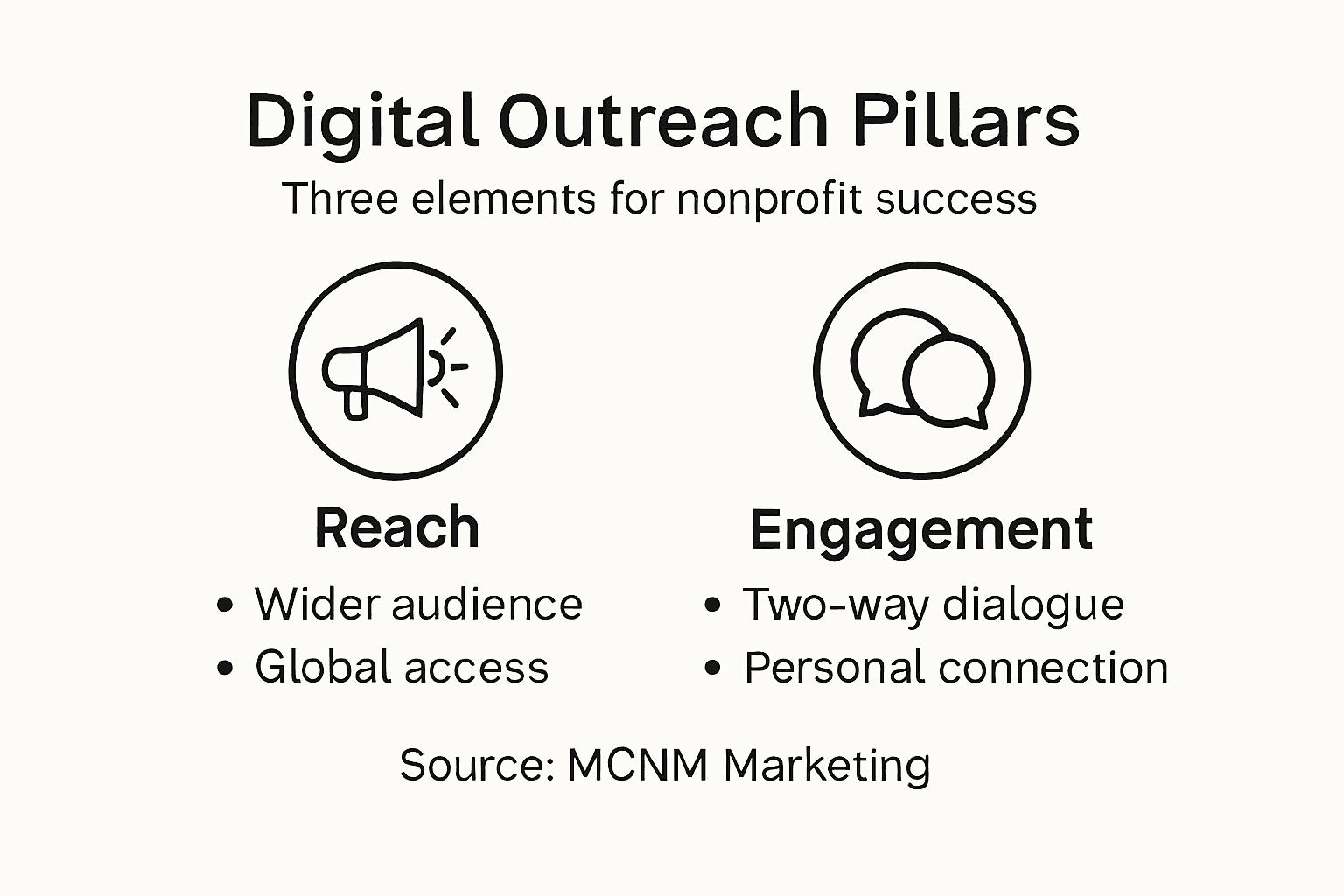
Three Core Pillars of Digital Outreach
Effective digital outreach rests on three pillars that work together:
- Reach – expanding your audience beyond geographic or demographic boundaries using multiple online channels
- Relevance – delivering messaging that addresses specific supporter segments and their interests
- Relationship – fostering two-way dialogue that builds trust and long-term donor commitment
Your nonprofit must balance all three. Wide reach without relevant messaging wastes resources. Relevant messaging without relationship-building creates one-time transactions instead of sustained support.
Compare how digital outreach pillars drive success:
| Pillar | Main Contribution | If Neglected |
|---|---|---|
| Reach | Increases audience size | Limited growth, missed donors |
| Relevance | Resonates with supporter needs | Lower engagement, wasted resources |
| Relationship | Builds trust and loyalty | One-time gifts, low retention |
The Role of Digital Literacy and Ethical Practice
Scientific dissemination through digital platforms demonstrates how organizations engage diverse audiences through ethical, transparent practices. For nonprofits, this means being honest about how you use donor data, clear about your mission impact, and respectful of supporter privacy.
Your digital outreach strategy should reflect your values. Using AI-driven personalization to enhance supporter experience differs fundamentally from using it to manipulate behavior.
Ethical digital outreach builds trust through transparency, not exploitation. Your supporters choose to engage because they genuinely align with your mission, not because algorithms manipulated them into it.
This alignment between technology and values forms the foundation of sustainable donor relationships and community impact.
Key Takeaways
- Digital outreach uses multiple online channels to build two-way relationships with supporters
- Data from digital platforms reveals what messaging and content actually resonates with your audience
- Three pillars drive success: reach, relevance, and relationship-building
- Ethical practices and transparency strengthen long-term supporter commitment
Pro tip: Start by mapping where your current supporters already spend time online—social media platforms, email, or community websites—then focus your initial outreach efforts on those channels before expanding to new ones.
Types of Digital Outreach Channels
Your nonprofit can reach supporters across multiple digital channels. Each channel serves different purposes, attracts different audience segments, and requires distinct content strategies. Choosing the right mix depends on where your supporters spend time and what messages resonate with them.
Understanding your available channels helps you allocate resources effectively and avoid spreading yourself too thin. Start with two or three channels you can manage consistently, then expand as your team grows.
Email Marketing
Email marketing remains the highest-ROI digital channel for nonprofits. It delivers direct access to engaged supporters who have explicitly opted in to hear from you. Unlike social media, email doesn't depend on algorithms; your message lands directly in supporter inboxes.
Email works best for:
- Sharing impact updates and stories from your programs
- Announcing fundraising campaigns or volunteer opportunities
- Sending donation receipts and thank-you messages
- Segmenting audiences by interest or giving history
Email automation saves time while personalizing communication. You can send welcome sequences to new supporters, birthday messages to donors, or event reminders without manual effort each time.
Social Media Platforms
Social media creates two-way conversation spaces where supporters share content, comment on your updates, and become advocates. Different platforms serve different purposes:
Facebook reaches broad demographics and works well for community building. Stories, live videos, and event promotion perform strongly here.
Instagram resonates with younger audiences through visual storytelling. Program photos, volunteer spotlights, and mission-driven behind-the-scenes content build emotional connection.
LinkedIn reaches donors with professional backgrounds. Share impact reports, volunteer recruitment, and organizational leadership insights.
TikTok reaches Gen Z and younger millennials through short, authentic videos. Many nonprofits use it to humanize their mission and recruit young volunteers.
You don't need to be everywhere. Choose platforms where your actual supporters already gather.
Your Nonprofit Website
Your website serves as the digital hub where all other channels direct people. It's where donors learn your story, make gifts, volunteers sign up, and supporters find detailed information about your programs.

A well-designed website builds credibility and converts visitors into supporters. Mobile responsiveness matters because most nonprofit visitors browse on phones.
Here's a breakdown of core digital outreach channels and their best use cases:
| Channel | Best For | Key Strength |
|---|---|---|
| Email Marketing | Retaining donors, updates | Direct, personalized reach |
| Social Media (Facebook) | Community building, events | Broad demographics reach |
| Social Media (Instagram) | Visual storytelling, engaging youth | High emotional connection |
| Social Media (LinkedIn) | Recruiting professionals | Professional audience focus |
| Social Media (TikTok) | Reaching Gen Z, recruiting young volunteers | Short-form, viral content |
| Website | Information hub, credibility | Supports all engagement |
| Paid Ads | Reaching new audiences | Precise targeting, quick scale |
Paid Digital Advertising
Paid ads on Google, Facebook, and Instagram let you target specific audiences by location, age, interests, and behavior. Unlike organic social media, paid ads guarantee visibility regardless of algorithm changes.
Paid channels work best for:
- Promoting fundraising campaigns to broader audiences
- Recruiting volunteers with specific skill sets
- Reaching new supporters outside your current network
- Retargeting website visitors who didn't convert on first visit
Content and Messaging Across Channels
Each channel requires different content formats and messaging approaches. A powerful donor story works as a long email, a shorter Instagram post with photos, a Facebook video, or a detailed website case study.
Consistency across channels builds recognition, but each platform demands unique formatting. Adapt your core message to fit the channel, not the other way around.
Your messaging should remain authentic to your mission while tailored to each platform's audience and culture. Your nonprofit's voice stays consistent even as the delivery method changes.
Pro tip: Audit where your current donors, volunteers, and online visitors already spend time using Google Analytics and social media insights, then prioritize those channels before experimenting with new platforms.
How Digital Outreach Engages Communities
Digital outreach creates meaningful connections by meeting people where they already are online. Rather than expecting supporters to come to you, your nonprofit reaches them through email, social media, messaging apps, and websites they check daily. This accessibility transforms how communities participate in your mission.
Effective digital engagement goes beyond broadcasting messages. It creates two-way dialogue where supporters feel heard, valued, and part of something larger than themselves.
Building Trust Through Personalized Communication
Digital platforms enable personalized communication that speaks directly to individual supporters' interests and values. A donor who gave to your youth programs receives updates about youth initiatives. A volunteer interested in environmental work sees content about your green projects.
Personalization signals that you see supporters as individuals, not generic email addresses. This recognition builds loyalty and increases the likelihood they'll stay engaged long-term.
Your digital strategy should include:
- Segmenting supporter lists by giving history, volunteer interests, and program engagement
- Tailoring message frequency to subscriber preferences
- Recognizing donor anniversaries and milestone gifts
- Thanking volunteers by name and highlighting their specific impact
Creating Spaces for Dialogue and Participation
Community engagement means inviting participation, not just consumption. Digital tools enable supporters to voice opinions, share feedback, and shape your programs.
Digital outreach fosters trust and shared power by creating genuine space for community voices in decision-making. When marginalized communities see their input directly influences nonprofit strategies, engagement deepens.
Practical ways to invite participation:
- Hosting online town halls where donors ask questions and provide feedback
- Running social media polls about program priorities
- Creating private Facebook groups where volunteers discuss ideas
- Sending surveys asking supporters what content they want to see
- Featuring supporter stories and voices on your platforms
Removing Barriers to Connection
Geographical distance no longer prevents engagement. A supporter in rural Montana can watch your program livestream. Someone working night shifts can volunteer remotely. A person with mobility limitations can attend online events.
Digital outreach removes practical barriers that kept people from engaging. It also breaks down social barriers when your nonprofit communicates in multiple languages, offers closed captions, and uses accessible design.
Sustaining Momentum Through Consistent Presence
Communities engage with nonprofits that show up consistently. Sporadic communication creates confusion about whether your organization is active.
Regular, authentic digital presence builds community confidence. Your supporters learn they can count on you for updates, opportunities, and support.
Consistency doesn't mean posting constantly. It means maintaining a predictable rhythm—weekly emails, twice-daily social media check-ins, monthly newsletters—that supporters come to expect.
Measuring What Engagement Really Means
Track metrics that reveal genuine connection, not just clicks. Open rates matter less than whether supporters act on your messages. Likes matter less than whether followers share your content with others.
Pro tip: Start by surveying 10-15 active supporters and ask directly what digital communications they find most valuable, then build your strategy around those preferences rather than assuming what works.
Strategies and Tools for Effective Outreach
Successful digital outreach requires both strategic thinking and the right technology. Your nonprofit needs a clear plan aligned with your mission, combined with tools that automate repetitive tasks and provide insights into what's working. This combination lets your team focus on relationships rather than administrative work.
The best strategy without tools becomes exhausting. The best tools without strategy wastes money. Together, they multiply your impact.
Start With Strategic Planning
Strategic planning and capacity building form the foundation for effective digital transformation. Before implementing any tool, clarify what you want to achieve. Are you building donor retention? Recruiting volunteers? Increasing event attendance? Each goal requires different strategies and tools.
Your outreach strategy should include:
- Clear goals with measurable outcomes
- Audience segmentation by supporter type and interests
- Content calendar aligned with fundraising cycles and program timelines
- Success metrics that reveal genuine impact, not just vanity numbers
- Budget allocation across channels based on where your audience engages
This planning prevents the common mistake of adopting shiny tools that don't align with your actual mission or capacity.
Marketing Automation Saves Time and Improves Results
Marketing automation handles repetitive tasks like sending welcome emails, birthday messages, and event reminders. It segments your audience automatically and delivers personalized messages at scale. Your team focuses on strategy and creative work while automation handles the execution.
Automation addresses real capacity constraints. A small nonprofit team can't manually send personalized emails to hundreds of supporters, but automation systems can. This means better supporter experience without overwhelming staff.
Automation works best for:
- Welcome sequences for new donors or volunteers
- Donation receipts and impact reports sent automatically
- Birthday and anniversary recognition messages
- Event registration reminders and follow-up sequences
- Re-engagement campaigns for inactive supporters
Choose Tools That Match Your Budget and Capacity
Your nonprofit doesn't need expensive enterprise software. Many excellent platforms offer nonprofit-specific pricing or free tiers. The question isn't which tool is best in general; it's which tool your team can actually use consistently.
Evaluate tools based on:
- Cost and nonprofit discounts available
- Ease of use for your current team skill level
- Integration with tools you already use
- Customer support quality and responsiveness
- Whether training requirements match your timeline
Data Drives Better Decisions
Every digital tool generates data about what supporters engage with. Track which emails get opened, which social posts get shared, which programs attract volunteer interest. This data reveals what's working without requiring you to guess.
Data-driven decisions reduce wasted effort. Stop guessing what supporters want; let their actions show you.
Start tracking metrics that matter to your mission. Email open rates don't matter if recipients don't eventually donate or volunteer. Website traffic doesn't matter if visitors never convert to supporters.
Integration Creates Seamless Workflows
Your outreach tools should talk to each other. When someone donates through your website, that information automatically feeds into your email system so they receive appropriate donor communications. When a volunteer signs up, they're automatically added to the volunteer newsletter segment.
Integration eliminates manual data entry and reduces errors. Your team spends less time managing systems and more time serving your community.
Pro tip: Before implementing any new tool, spend two weeks documenting exactly how your team currently manages outreach, then choose tools that automate those specific processes rather than forcing your team to change their workflow.
Common Challenges and Mistakes to Avoid
Digital outreach sounds simple until you try it. Your nonprofit will face real obstacles: budget constraints, staff turnover, technology overwhelm, and audience engagement difficulties. Understanding these challenges ahead of time helps you avoid costly mistakes and plan realistic timelines.
Most challenges aren't unsolvable. They just require intentional strategy and honest assessment of your actual capacity.
Limited Resources and Budget Constraints
Nonprofits face challenges including limited financial resources and lack of technical expertise that slow digital transformation. You can't hire specialists for every platform or purchase every premium tool available. Your team likely wears multiple hats already.
The mistake is trying to do everything at once. You don't need to launch on seven social media platforms simultaneously. Start small, build capacity, then expand strategically.
Realistic approaches for limited budgets:
- Focus on two or three channels where your audience actually gathers
- Use free or low-cost nonprofit tools before paying for premium versions
- Automate repetitive tasks so staff time focuses on relationship-building
- Repurpose content across channels rather than creating new material for each platform
- Build skills gradually through free training and peer learning
Cultural Resistance Within Your Organization
Your team may resist digital tools if they're comfortable with current processes. Staff who've always done outreach one way may feel threatened by technology or skeptical that digital approaches actually work.
Overcome resistance by involving your team in planning. Ask what digital tools would actually make their work easier, not harder. When staff see how automation reduces manual work, they become advocates rather than skeptics.
Reaching Geographically and Culturally Diverse Audiences
Outreach programs face difficulty reaching target audiences across geographic and cultural barriers. A digital strategy that works for urban, English-speaking supporters may miss rural communities or non-English speakers entirely.
Avoid assuming all supporters access digital channels the same way. Some prefer email; others only use Facebook. Some communities lack reliable internet. Others face language barriers.
Address diversity through:
- Communicating in multiple languages when your community requires it
- Offering multiple ways to engage: online, phone, in-person
- Asking supporters how they prefer to hear from you
- Partnering with trusted community leaders to build trust and extend reach
- Using accessible design on your website for people with disabilities
Mistaking Activity for Impact
Your nonprofit can post daily on social media and still reach nobody meaningful. High email open rates don't guarantee donations. Website traffic doesn't mean supporters care about your mission.
Activity metrics feel productive but reveal nothing about real impact. Track what actually matters: donors retained, volunteers recruited, programs expanded.
A common mistake is measuring vanity metrics instead of mission-aligned outcomes. Focus on whether digital outreach actually increases donations, volunteer hours, program participation, and community awareness.
Neglecting Consistent Follow-Up
Many nonprofits broadcast once and expect action. Digital outreach requires consistent, repeated messaging. Supporters need multiple touchpoints before deciding to donate or volunteer.
Spotty communication creates confusion and reduces effectiveness. Supporters wonder if your organization is still active. Momentum disappears.
Pro tip: Document one specific challenge your team faces in current outreach, then research solutions for that single problem before tackling broader digital transformation.
Transform Your Nonprofit’s Digital Outreach Into Lasting Impact
Struggling to balance reach, relevance, and relationship-building in your nonprofit’s digital strategy? You are not alone. Many organizations face challenges like limited resources, staff capacity, and connecting authentically with supporters in an ever-changing digital landscape. This article’s insights highlight the critical need for purpose-driven digital outreach that fosters genuine engagement while respecting ethical practices and data privacy.
At MCNM Marketing, we understand how vital it is to create scalable, AI-powered solutions tailored specifically for faith-based nonprofits and ministries. Our expertise in website development, marketing automation, and SEO optimization can help you overcome those common hurdles. With services focused on building effective digital channels such as email marketing and paid advertising, we empower your organization to amplify its mission with consistent, personalized communication and data-driven decisions.
Ready to move beyond guesswork and limited engagement? Visit MCNM Marketing to explore how our strategic, purpose-led digital growth solutions can transform your outreach efforts. Discover how our AI-powered automation tools integrate seamlessly with your existing workflows to save time and build trust with your community. Take the next step toward meaningful impact today and see the difference a comprehensive, mission-aligned digital presence can make.
Frequently Asked Questions
What is digital outreach for nonprofits?
Digital outreach for nonprofits refers to using online platforms and tools to communicate a nonprofit's mission, build relationships, and mobilize supporters. It enables organizations to reach diverse audiences, track engagement, and personalize interactions effectively.
How does digital outreach differ from traditional outreach methods?
Digital outreach involves two-way engagement, allowing supporters to actively participate in a nonprofit's mission, whereas traditional outreach often relies on one-way communication. Digital methods track metrics like clicks and conversions, providing data-driven insights into audience engagement.
What are the core components of an effective digital outreach strategy?
An effective digital outreach strategy hinges on three core pillars: reach, relevance, and relationship. This means expanding your audience through various channels, delivering tailored messaging, and fostering trustworthy long-term relationships with supporters.
How can nonprofits ensure ethical practices in their digital outreach?
Nonprofits can ensure ethical practices by being transparent about their use of donor data, clearly communicating their mission impact, and respecting supporter privacy. Building trust through authentic engagement is crucial to sustainable donor relationships.
Recommended
- Digital Growth Strategy: Shaping Nonprofit Impact | AI and Digital Marketing Service by MCNM
- Why Email Marketing Matters for Nonprofits | AI and Digital Marketing Service by MCNM
- Why Use Content Automation for Nonprofits | AI and Digital Marketing Service by MCNM
- The Benefits of Digital Marketing Automation for Ministries and Nonprofits | AI and Digital Marketing Service by MCNM