

Finding new ways to build deeper relationships with supporters is a constant challenge for faith-based organizations. As traditional fundraising efforts fall short, understanding the power of data-driven marketing becomes vital for those striving to grow their community and increase donations. This guide explores how American, European, and Canadian nonprofits are using donor demographics and engagement metrics to personalize communication and optimize their outreach for maximum impact.
Table of Contents
- Defining Data-Driven Marketing for Nonprofits
- Types of Data Nonprofits Use Effectively
- How Data-Driven Strategies Improve Outreach
- AI Tools and Automation in Faith-Based Marketing
- Common Pitfalls and Best Practices
- Risks, Costs, and Alternatives Explained
Key Takeaways
| Point | Details |
|---|---|
| Data-Driven Marketing Enhances Effectiveness | Nonprofits can leverage data insights to personalize donor interactions and improve fundraising outcomes. |
| Diverse Data Types Drive Strategy | Utilizing donor demographics, program performance, financial information, and qualitative feedback enables targeted and impactful strategies. |
| AI Tools Improve Engagement | Faith-based organizations can enhance communication and operational efficiency through AI applications, thereby deepening community connections. |
| Navigate Risks and Costs | Nonprofits should balance the benefits of data-driven marketing with potential privacy risks and financial investments through phased integration approaches. |
Defining Data-Driven Marketing for Nonprofits
Data-driven marketing represents a strategic approach where nonprofits leverage comprehensive data insights to make informed decisions, personalize donor interactions, and optimize organizational resources. At its core, this methodology transforms raw information into actionable intelligence that can dramatically improve fundraising effectiveness and community engagement.
The fundamental components of data-driven marketing for nonprofits include:
- Donor demographic analysis
- Campaign performance tracking
- Behavioral pattern recognition
- Targeted communication strategies
- Resource allocation optimization
By understanding nonprofit data marketing insights, organizations can move beyond traditional fundraising methods. Modern nonprofits recognize that data isn't just numbers—it's a powerful narrative about donor motivations, giving patterns, and potential impact areas.
Successful data-driven marketing requires collecting and analyzing multiple data points, including donation history, engagement metrics, communication preferences, and demographic information. This holistic approach enables nonprofits to create highly personalized outreach strategies that resonate more deeply with potential supporters.
Pro tip: Start small by identifying 2-3 key metrics that directly relate to your nonprofit's mission, and build your data collection strategy around those initial indicators.
Types of Data Nonprofits Use Effectively
Nonprofits leverage multiple data types to drive strategic decision-making and maximize their organizational impact. Comprehensive data collection strategies enable these organizations to understand their operations, donor base, and program effectiveness with unprecedented depth and precision.
The primary categories of data nonprofits effectively utilize include:
- Donor Demographics
- Age ranges
- Income levels
- Geographic locations
- Giving history
- Program Performance Data
- Participant engagement metrics
- Program outcome measurements
- Cost-effectiveness analysis
- Financial Information
- Donation tracking
- Expense allocation
- Fundraising campaign results
- Qualitative Feedback
- Beneficiary experiences
- Donor satisfaction surveys
- Community impact narratives
Each data type serves a unique purpose in helping nonprofits create more targeted, efficient, and impactful strategies. Quantitative metrics provide objective measurements, while qualitative data offers nuanced insights into human experiences and emotional connections to the organization's mission.
Successful nonprofits integrate these diverse data streams to create holistic understanding, allowing them to make informed decisions that optimize resource allocation, improve program design, and enhance donor engagement.
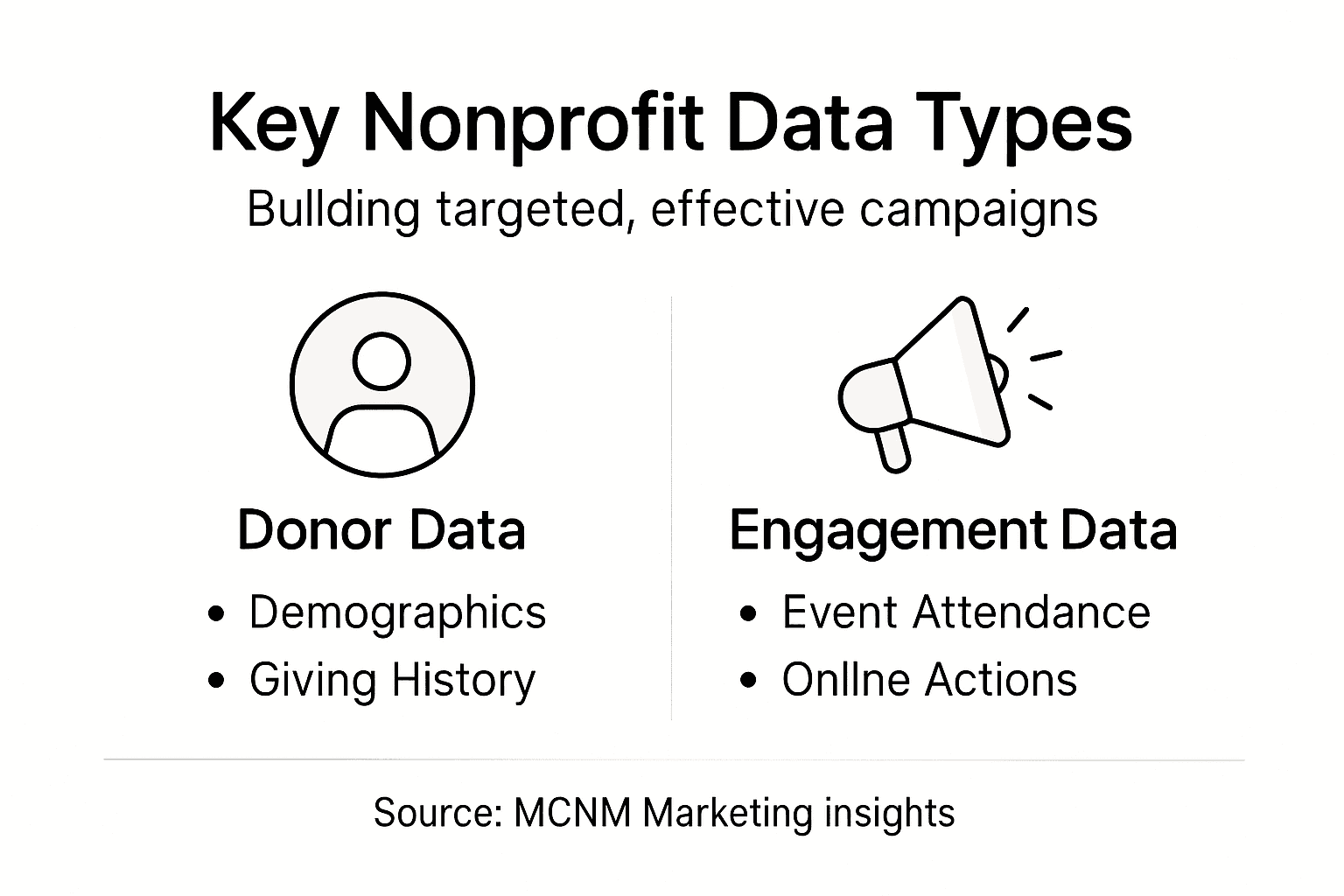
Here's how different data types contribute to nonprofit effectiveness:
| Data Type | Key Value Provided | Typical Use Example |
|---|---|---|
| Donor Demographics | Identify target supporters | Tailored fundraising campaigns |
| Program Performance | Measure project outcomes | Adjust program design |
| Financial Information | Track funding flows | Optimize expense allocation |
| Qualitative Feedback | Uncover emotional drivers | Improve beneficiary experience |
Pro tip: Invest in a robust data management system that can seamlessly integrate different data types and provide actionable insights across your nonprofit's key operational areas.
How Data-Driven Strategies Improve Outreach
Nonprofits increasingly recognize the transformative power of data-driven outreach strategies to connect more effectively with their target audiences. By leveraging sophisticated analytics, organizations can move beyond traditional one-size-fits-all communication approaches and develop highly personalized engagement methods.
Key ways data-driven strategies enhance nonprofit outreach include:
- Audience Segmentation
- Precise demographic targeting
- Customized communication channels
- Tailored messaging approaches
- Engagement Optimization
- Tracking interaction rates
- Identifying most responsive segments
- Refining communication strategies
- Resource Allocation
- Focusing on high-impact channels
- Reducing ineffective spending
- Maximizing return on outreach investments
Data analytics enables nonprofits to understand nuanced audience behaviors, preferences, and motivations. By analyzing interaction patterns, donation histories, and engagement metrics, organizations can create more meaningful and targeted communication strategies that resonate deeply with potential supporters.

Successful data-driven outreach goes beyond simple metrics, transforming raw information into actionable insights that drive meaningful community connections and support. The ability to predict, understand, and respond to donor behaviors represents a significant competitive advantage in the nonprofit sector.
Pro tip: Develop a comprehensive data dashboard that aggregates key performance indicators from multiple sources, allowing real-time insights into your outreach effectiveness.
AI Tools and Automation in Faith-Based Marketing
The integration of artificial intelligence represents a transformative opportunity for faith-based organizations to enhance their outreach and community engagement. AI-powered tools for faith communities are reshaping how religious organizations communicate, connect, and fulfill their mission in the digital age.
Key AI automation applications in faith-based marketing include:
- Communication Enhancement
- Personalized sermon content generation
- Targeted community messaging
- Sentiment analysis for engagement tracking
- Operational Efficiency
- Automated administrative tasks
- Donor communication management
- Resource allocation optimization
- Community Engagement
- Customized spiritual guidance tools
- Interactive learning platforms
- Multilingual communication support
AI technologies enable faith-based organizations to create more meaningful, responsive, and personalized interactions while maintaining the core spiritual values that define their mission. By leveraging intelligent tools, religious institutions can extend their reach, deepen community connections, and address individual spiritual needs more effectively.
The ethical implementation of AI requires a careful balance between technological innovation and maintaining the human essence of spiritual community. Successful faith-based organizations will view AI as a supportive tool that enhances, rather than replaces, human connection and pastoral care.
Pro tip: Select AI tools that offer robust privacy controls and align closely with your organization's core values and mission.
Common Pitfalls and Best Practices
Data-driven marketing for nonprofits demands strategic approaches to avoid common implementation challenges. Data-driven marketing execution strategies require careful navigation to maximize organizational impact and resource efficiency.
Common pitfalls nonprofits must actively avoid include:
- Metric Mismanagement
- Overemphasis on vanity metrics
- Inconsistent data tracking
- Neglecting meaningful performance indicators
- Strategic Limitations
- Rigid campaign structures
- Lack of real-time adaptation
- Insufficient audience segmentation
- Technical Challenges
- Poor data integration
- Inadequate privacy protections
- Inefficient automation implementations
Successful nonprofits develop robust frameworks that transform potential pitfalls into opportunities for growth. By establishing clear key performance indicators, maintaining data integrity, and fostering a culture of continuous learning, organizations can create more responsive and effective marketing strategies.
The most effective approaches emphasize flexibility, continuous evaluation, and alignment between technological tools and organizational mission. Nonprofits must view data-driven marketing as an evolving ecosystem that requires ongoing refinement and strategic thinking.
Pro tip: Implement quarterly data strategy reviews to ensure your marketing approaches remain aligned with organizational goals and emerging technological capabilities.
Risks, Costs, and Alternatives Explained
Nonprofit organizations must carefully navigate the complex landscape of data-driven marketing, balancing potential benefits against significant risks and investment requirements. Comprehensive data marketing strategies demand nuanced understanding of both opportunities and potential challenges.
Key risks and associated considerations include:
- Privacy and Security Risks
- Potential data breach vulnerabilities
- Compliance with regulatory requirements
- Ethical data collection challenges
- Financial Investments
- Technology infrastructure costs
- Staff training and skill development
- Ongoing system maintenance expenses
- Operational Complexities
- Technical implementation challenges
- Organizational culture adaptation
- Performance tracking and measurement
Alternative approaches provide nonprofits with flexible strategies when full data-driven implementation seems overwhelming. These options range from hybrid models that incorporate selective data insights to more traditional community-centered outreach methods that prioritize qualitative engagement over quantitative analysis.
Successful nonprofits recognize that data-driven marketing is not an all-or-nothing proposition. Strategic organizations develop adaptable approaches that leverage technological capabilities while maintaining core mission-driven values and human-centered connections.
Compare common risks, costs, and alternatives for data-driven nonprofit marketing:
| Challenge | Potential Impact | Alternative Approach |
|---|---|---|
| Privacy Risks | Loss of donor trust | Manual outreach, minimal data use |
| High Costs | Budget strain | Hybrid model, phased integration |
| Technical Complexity | Slow adoption | Community-centered engagement |
Pro tip: Start with small, manageable data integration projects that demonstrate clear value and build organizational confidence in data-driven approaches.
Unlock the Power of Data-Driven Marketing for Your Nonprofit
Many nonprofits face the challenge of transforming complex data into clear, actionable strategies that truly resonate with their communities. This article highlights challenges like metric mismanagement, privacy concerns, and the need for personalized outreach to deepen donor engagement. If your organization is seeking to optimize campaign performance, enhance resource allocation, and leverage AI-powered tools to connect authentically with supporters, you are not alone.
MCNM Marketing specializes in helping faith-based nonprofits build purpose-led digital marketing strategies that align with your mission. With expertise in website development, marketing automation, and SEO on WordPress platforms, we provide customized solutions designed to make your data work harder for you. Our AI-driven automation tools and analytics services help you move beyond vanity metrics toward impactful results.
Take the next step to amplify your nonprofit’s outreach and fundraising success. Visit MCNM Marketing to discover how our tailored digital growth strategies can transform your data into meaningful donor connections. Explore how our services in website development and marketing automation turn insights into action now.
Frequently Asked Questions
What is data-driven marketing for nonprofits?
Data-driven marketing for nonprofits is a strategic approach that utilizes comprehensive data insights to make informed decisions, personalize donor interactions, and optimize organizational resources. It transforms raw data into actionable intelligence to improve fundraising effectiveness.
How can nonprofits effectively use data-driven marketing?
Nonprofits can use data-driven marketing by analyzing donor demographics, tracking campaign performance, recognizing behavioral patterns, implementing targeted communication strategies, and optimizing resource allocation to enhance outreach and fundraising efforts.
What types of data should nonprofits focus on for successful marketing?
Nonprofits should focus on donor demographics, program performance data, financial information, and qualitative feedback to create targeted strategies and understand their impact better. This helps in making informed decisions for marketing and fundraising.
What are common pitfalls in implementing data-driven marketing for nonprofits?
Common pitfalls include mismanaging metrics, having rigid campaign structures, and facing technical challenges like poor data integration. To avoid these, nonprofits should establish clear key performance indicators and maintain data integrity.
Recommended
- AI for Grants and Revenue: How MCNM Helps Nonprofits & Small Businesses Grow | AI and Digital Marketing Service by MCNM
- Services | AI and Digital Marketing Service by MCNM
- From Efficiency to Effectiveness: Generative AI’s New Role in Digital Marketing | AI and Digital Marketing Service by MCNM
- Our Work | AI and Digital Marketing Service by MCNM